









ALEGrO project strengthens Belgian and European networks
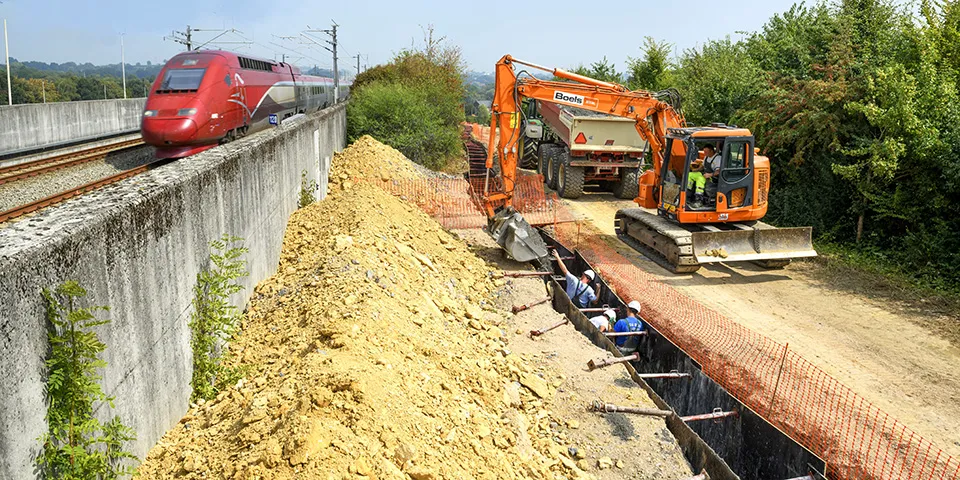
The ALEGrO project will create the first interconnector between Belgium and Germany. The connection will pass through 14 Belgian municipalities and extend over a distance of 90 km, of which 49 km is in Belgium and 41 km in Germany. “Following a testing phase, the interconnector is intended to enter service in 2020,” says Julien Madani, Project Communication Manager at Elia, the Belgian transmission system operator.
By 2020, all European countries aim to import and export 15% of their domestic production. Belgium already has interconnectors with France, the United Kingdom and the Netherlands, or plans for them are in place. “ALEGrO is the missing link because we do not yet have an interconnector with Germany. The connection supports a transmission capacity of 1,000 MW, equivalent to 1/10 of Belgium’s average electricity consumption,” says Julien Madani of Elia, the transmission system operator for Belgium’s high-voltage grid, which is leading the project together with German transmission system operator Amprion.
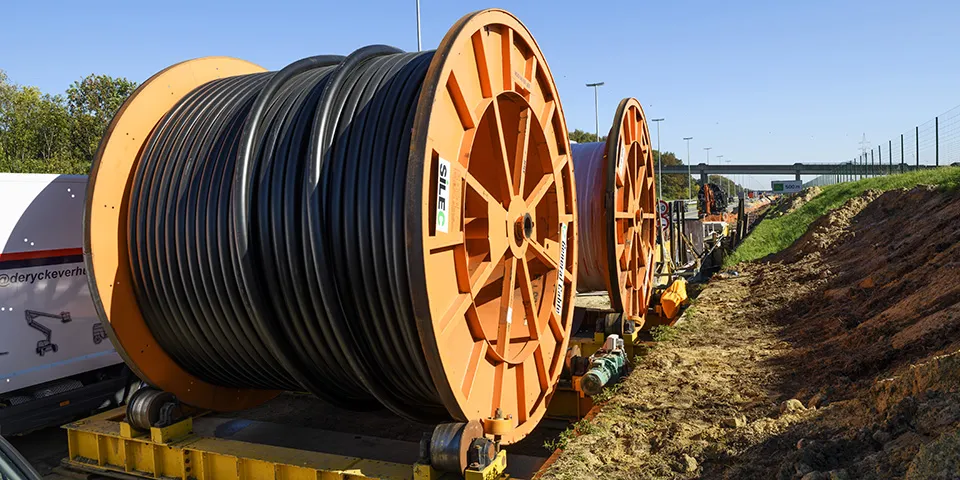
The connection will pass through 14 Belgian municipalities and extend over a distance of 90 kilometres, of which 49 km is in Belgium and 41 km in Germany.
3 main objectives
Elia now faces new challenges, such as managing the intermittent nature of these energy sources. Julien Madani says: “That is why it is important to expand the national market to a European level. ALEGrO will help us manage this volatility on the grid more effectively. If production in Belgium falls, we can inject electricity from Germany, and vice versa. By opening up the electricity market to greater competition, ALEGrO will also help bring market prices into line, benefiting both businesses and the public.”
The security of electricity supply will also improve. “ALEGrO is one of the major projects intended to support the security of our country’s electricity supply in the medium and long term,” explains Julien Madani. “Interconnections with neighbouring countries need to be strengthened, because Europe offers the opportunity to import or export at least 15 per cent of national production from or to neighbouring countries. By diversifying available energy sources, ALEGrO helps protect the grid against shortages during periods of high demand.”
Cooperation
Elia is leading this interconnection project between Germany and Belgium in cooperation with its German counterpart, Amprion. In brief, ALEGrO is a 90 km underground connection linking the future converter station in Lixhe (Visé) with the station in Oberzier, Germany. In Belgium, the connection will be 49 km long, linking the new converter station in Lixhe with the connection point in Raeren, on the German border near Eynatten. In Germany, the route will then continue for a further 41 km to Oberzier. Amprion obtained the permits required for the German section of the interconnector and officially opened the construction sites on 30 October 2018.
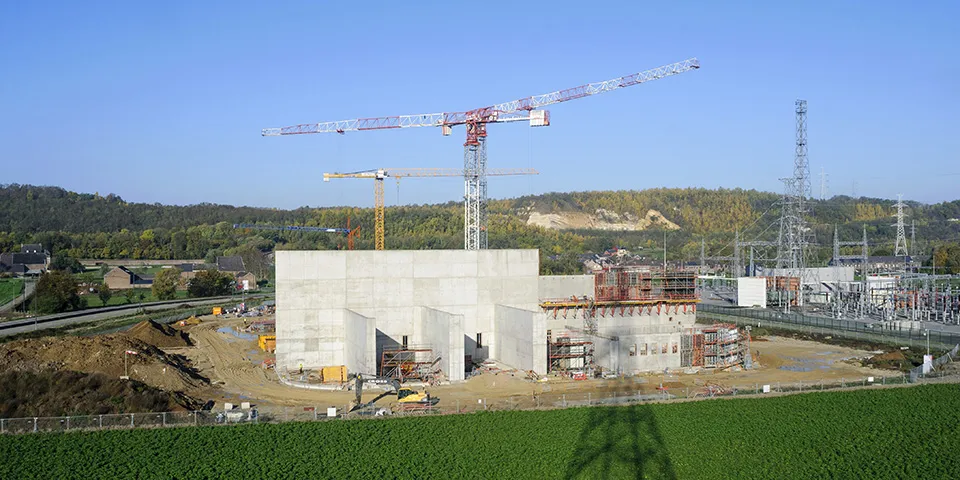
The Belgian station is under construction in Lixhe and will be approximately 100 metres long, 70 metres wide and 20 metres high.
Cooperation with local authorities and proactive communication with local residents are crucial to a project of this kind. Several meetings were therefore held during the permit application process. Julien Madani says: “Since work began at several sites, local residents have been kept informed of potential impacts through newsletters. Where necessary, we also organise information sessions for residents to provide them with as much information as possible. Information on Elia’s website is updated regularly too. A map allows you to track progress at the construction sites in real time, and there is also a freephone number and an email address for people to use if they have questions. We also, of course, continue to consult regularly with the municipal authorities.”
3 cable-laying techniques
To minimise the impact on residents and their surroundings, Elia will use three cable-laying techniques: open-cut trenches, directional drilling and a microtunnel. “Along most of the route, a trench 1.80 m deep and 1 m wide will be excavated in 1 km sections. Work on each section takes an average of 6 weeks,” explains Julien Madani. “Directional drilling will be used to facilitate passage beneath major infrastructure such as junctions, interchanges and the TGV line. The microtunnel being excavated beneath the Meuse and the Albert Canal is designed to carry two HV cables underwater. This will have no impact on mobility. Horizontal excavation of the microtunnel began in early April using a tunnel boring machine. The microtunnel will be excavated to a depth of up to 30 metres below water level, will have a final length of approximately 600 metres and a diameter of 2 metres.”
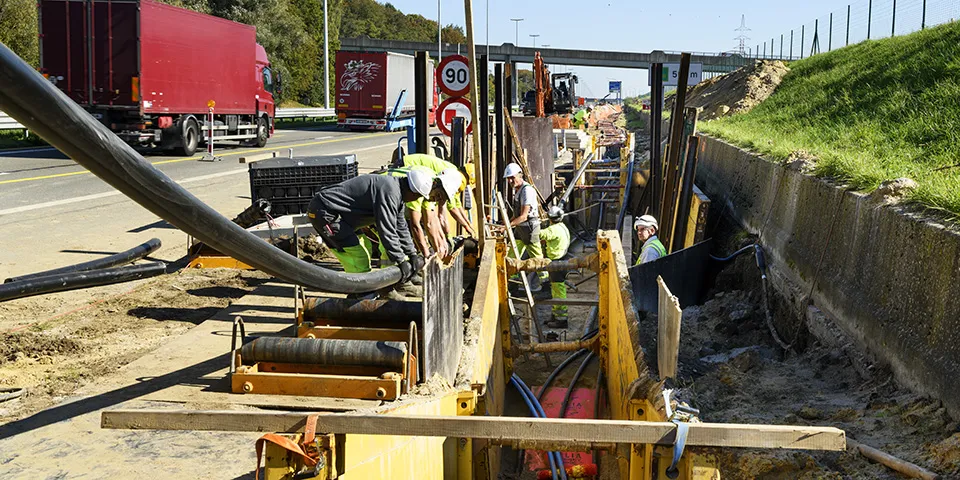
ALEGrO links the future converter station in Lixhe (Visé) with the station in Oberzier, Germany.
Best available technology
ALEGrO uses DC technology, currently the best available technology for a connection of this kind between converter stations. This technology enables immediate, smooth power flows in both directions over long distances. Julien Madani says: “The existing networks use AC. At either end of the underground connection, the stations in Lixhe and Oberzier link the national grid to ALEGrO. These stations convert AC to DC and vice versa. This allows both countries to import or export electricity as needed.”
The Belgian station is under construction in Lixhe and will be approximately 100 metres long, 70 metres wide and 20 metres high. It was designed by architecture firm CANEVAS and is being built by Siemens. Trees and vegetation will be planted to help integrate the station into the landscape. Civil engineering work is currently under way: the foundations have been laid and the 20-metre-high concrete walls have been erected. The next step is to install the electrical equipment.
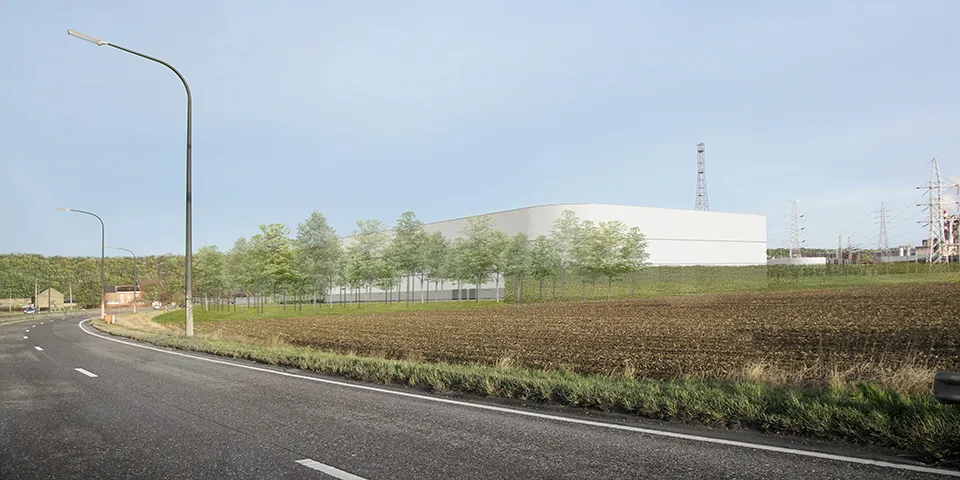
The station in Lixhe was designed by architecture firm CANEVAS and is being built by Siemens.. (Image: CANEVAS)
2020
The permits and authorisations required to build the route on Belgian territory were granted to Elia by the competent authorities at the end of 2017. Work on the three types of infrastructure, the connection, the converter station and the microtunnel, then began simultaneously in January 2018. “The work will take around two years. Elia is carrying it out with respect for residents and the environment, in cooperation with the local authorities. Following a testing phase, the interconnector is intended to enter service at the end of 2020,” concludes Julien Madani.
Question about this story? Ask your question
Keep following this
Get an email when a new story is published. No account needed.
- SubjectGeneral







