Mechelen’s station district comes fully back to life
Mechelen’s station district is undergoing major change. Work began 10 years ago on ‘Mechelen in Beweging’, a large-scale infrastructure project that is completely redeveloping Mechelen station and its wider surroundings. The second phase of the work bears the hallmark of Willemen Groep. Franki Construct and Willemen Infra joined forces in a temporary partnership to successfully complete the complex infrastructure works.
Anyone entering Mechelen via the Brusselsesteenweg (N1) or the Leuvensesteenweg (N26) cannot miss the transformation taking place in the station district. As early as 2012, the project partners, the city of Mechelen, AWV, Infrabel, NMBS and De Lijn, launched Mechelen in Beweging. The project is being delivered in several phases and will create a more pleasant station environment and safer road access to Mechelen. Specifically, it includes a new station building, a new rail bypass with two new tracks, a new road link between the Brusselsesteenweg and the N15 (Douaneplein), also known as the tangent, new cycle and pedestrian paths between the Brusselsesteenweg and the N15, and a new bus station.
Willemen Groep is a regular partner in all the infrastructure works required to deliver Mechelen in Beweging. In the first phase, Franki Construct, as part of a temporary partnership, worked on around 15 new structures, including the bridges for the new rail bypass, the tunnel beneath the Leuvensevaart, a road bridge over the Dijle and the sunken tangent beneath the railway. This package already included some of the structural works for the tangent from the Brusselsesteenweg to Douaneplein. We also built the tunnels beneath the railway at the Brusselsesteenweg and a new bridge over the Dijle. In the next phase, Willemen Infra and Franki Construct are working together to complete the tangent and the cycle and pedestrian paths between the Brusselsesteenweg and the N15.
New road link
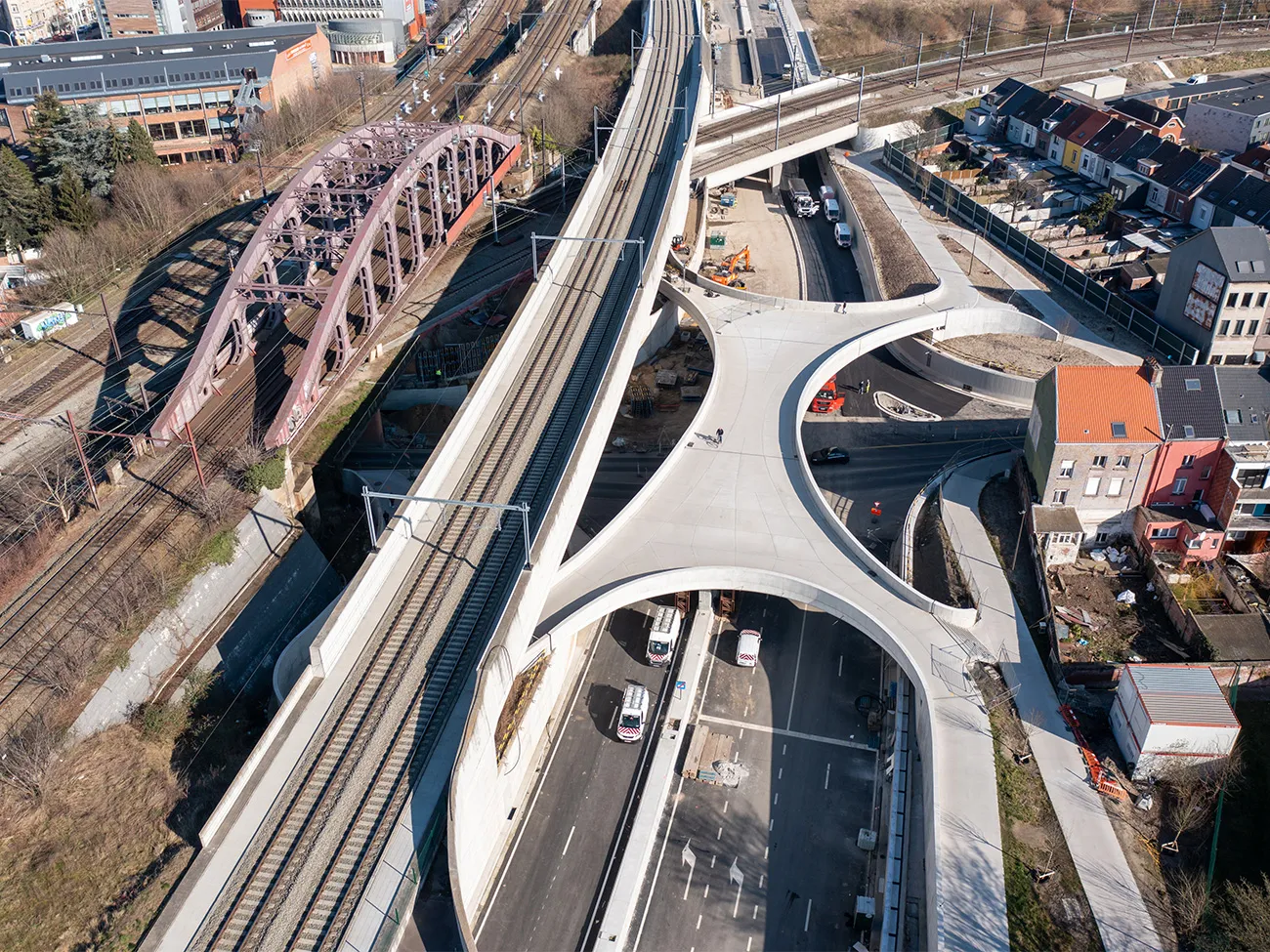
“In this phase of the project, we were specifically responsible for completing the tangent. This is a new 2.6 km regional road that will ease pressure on the station district and the ring road around Mechelen (R12), and improve the flow of through traffic. Essentially, we are rerouting the Brusselsesteenweg around the city centre by moving the route further out from the urban core and rebuilding it. There was a strong focus on safe cycle and pedestrian links, in the form of three cycle tunnels and two cycle bridges,” explain project directors Stijn (Franki Construct) and Kristof (Willemen Infra).
In recent years, the two companies in our group have connected the Brusselsesteenweg to the tangent, built a new cycle bridge over the Brusselsesteenweg, linking it to the Kruisbaan, constructed an intersection linking the Jubellaan to the tunnel beneath the Leuvense Vaart, built a cycle tunnel beneath the Jubellaan and converted the intersection of the Europalaan and Jubellaan into a T-junction. Franki Construct was responsible for building the tunnels and bridges, while Willemen Infra carried out all the road and drainage works, including several new intersections and cycle infrastructure.
The Arsenaalpuzzel
One of the project’s highlights is the so-called Arsenaalpuzzel, at the intersection of the Leuvensesteenweg and the R12. This is a unique bridge structure that enables cyclists and pedestrians to cross the tangent and the Leuvensesteenweg safely. The structure, unique in Flanders, is an important link in the cycle superhighway between Antwerp and Brussels, while also creating new connections between the Arsenaalwijk, the Dijlepad and the station. The Arsenaalpuzzel forms a central part of the new cycle and pedestrian route between Mechelen-Noord and Mechelen-Zuid, which was officially opened to cyclists at the end of 2021.
Tunnel fit-out
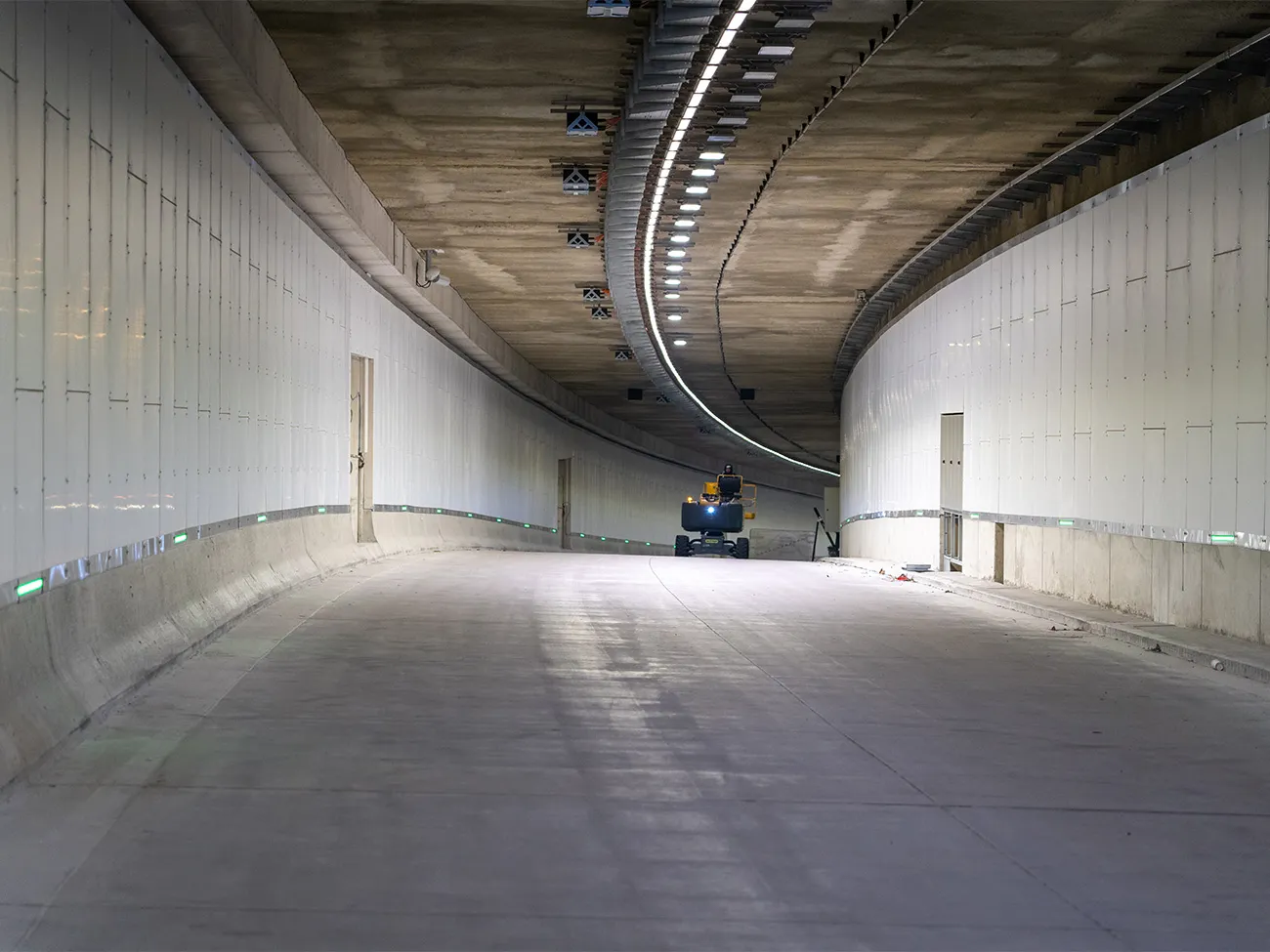
During the first phase of Mechelen in Beweging, a tunnel section was already built beneath the new rail bypass and the Dijle. In this phase, Franki Construct was responsible for fitting out the tunnel sections. “That ranged from fire-resistant spray coatings and cladding to the general tunnel fit-out. Our scope also included a major package of systems for fire protection, ventilation and lighting, covering the entire tangent, including the car park behind the station. The car park itself is complete, but we are managing traffic flow,” explains Stijn.
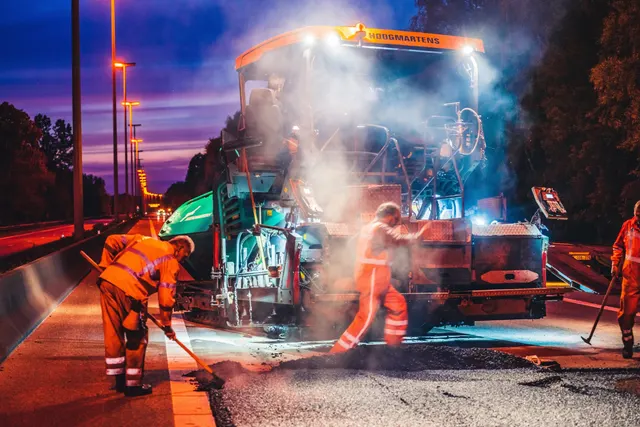
As well as the cycle infrastructure, Willemen Infra built the new road link. “We had to work alongside existing traffic almost everywhere. We could not close the roads completely. To manage this, we carried out the work at the different locations in phases. It was a huge logistical puzzle and required careful planning and coordination between the teams. It was also important to minimise disruption for the various road users. We drew up a separate programme for this. Its two key priorities were keeping car, cycle and pedestrian traffic safe, and causing as little disruption as possible to local residents during the works. In the end, the accompanying measures cost around €1.6 million,” says Kristof.
Working together towards the same goal
Alongside logistics, planning was the project team’s biggest challenge. “That is typical of a large construction project like this,” says Stijn. “And then there was the impact of COVID as well, which made it harder to procure materials. The fire-resistant spray material, for example, had to come from France. Because it has a short shelf life, this product is made almost to order, so there is virtually no stock. That caused a few problems, but nothing we could not overcome. On projects like this, where planning is so crucial, our strong relationship with sister company Willemen Infra comes in very handy. We work extremely well together and know each other inside out. We can respond quickly as a team and continually optimise the planning.”
Kristof agrees: “Willemen Infra and Franki Construct are certainly no strangers to one another. We have worked together many times and always pull in the same direction. That experience also means that our skills complement each other very well. For both parties, this is a technically bespoke project, so it is a major advantage to be so well aligned on planning as well. The great strength of this temporary partnership is that we have all the expertise needed for a site like this in-house. There was not a single problem on site that we could not solve ourselves.”
Technical challenges
It would be wrong to speak of problems during construction of the tangent, although the project certainly involved a host of technical challenges. “As Kristof has already mentioned, we had to keep through traffic moving as much as possible. To achieve this, we sometimes used traffic lights to let vehicles pass alternately while building the Arsenaalpuzzel. We had already studied this during the tender stage, but putting the tender designs into practice still proved more challenging at times,” says project leader Annelies.
Perhaps even more challenging was installing sheet piles in the middle of the Leuvensesteenweg without being allowed to stop traffic. “The same applied to the phasing of the cycle tunnels at Douaneplein and the Jubellaan. They had to be built beneath roads that could never be fully closed. At Douaneplein, we developed an alternative that meant we only had to divert traffic once onto temporary roads. In the next phase, traffic was already using the permanent road. You can imagine how many hours of meetings it took to coordinate and get approval for all those measures to minimise disruption.” Delivering the tunnel systems and those at the intersections in line with the architects’ vision required close collaboration with the various subcontractors. “They were responsible for translating that vision into plans that could be built and would work in practice. Often, it came down to the details,” Annelies concludes.
Question about this story? Ask your question
Who worked on it
Mechelen in Beweging in Mechelen
- tijdelijke maatschapFranki Construct
- tijdelijke maatschapWillemen Infra
Keep following this
Get an email when a new story is published. No account needed.
- ProjectMechelen in Beweging
- SubjectRoad construction
- CompanyFranki Construct
- CompanyWillemen Infra