Extensive and complex dewatering for a major road project
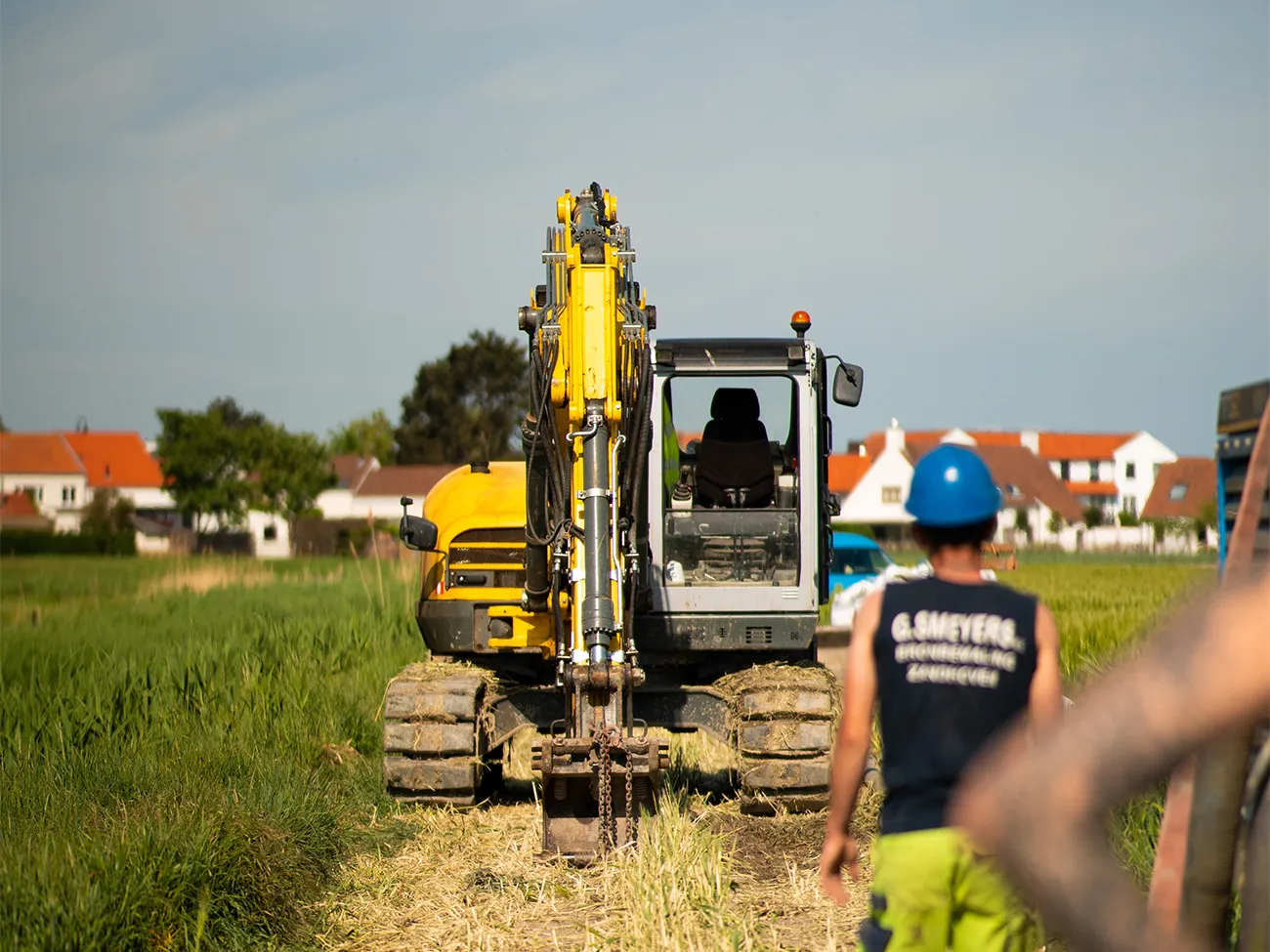
Knokke-Heist municipal council, in collaboration with Agentschap Wegen en Verkeer, commissioned Willemen Infra to carry out major infrastructure works to connect the Natiënlaan to the N49.
The works involve laying approximately 6,000 linear metres of new separate sewerage, together with associated structures at depths ranging from 3 to 6 m below ground level. Deep excavation is required, particularly at the junction of the Natiënlaan and the Isabellavaart, to construct a pumping station and several underground utility crossings beneath the Natiënlaan.
Given the relatively high groundwater level on site, extensive dewatering works are required. Because of their scale and complexity, Willemen Infra contacted G. Smeyers of Zandhoven. G. Smeyers had also carried out the dewatering works during an earlier phase, when the turbo roundabout was built on the Natiënlaan near the Kalvekeetdijk. The work produced excellent results and greatly satisfied both the main contractor and the clients.
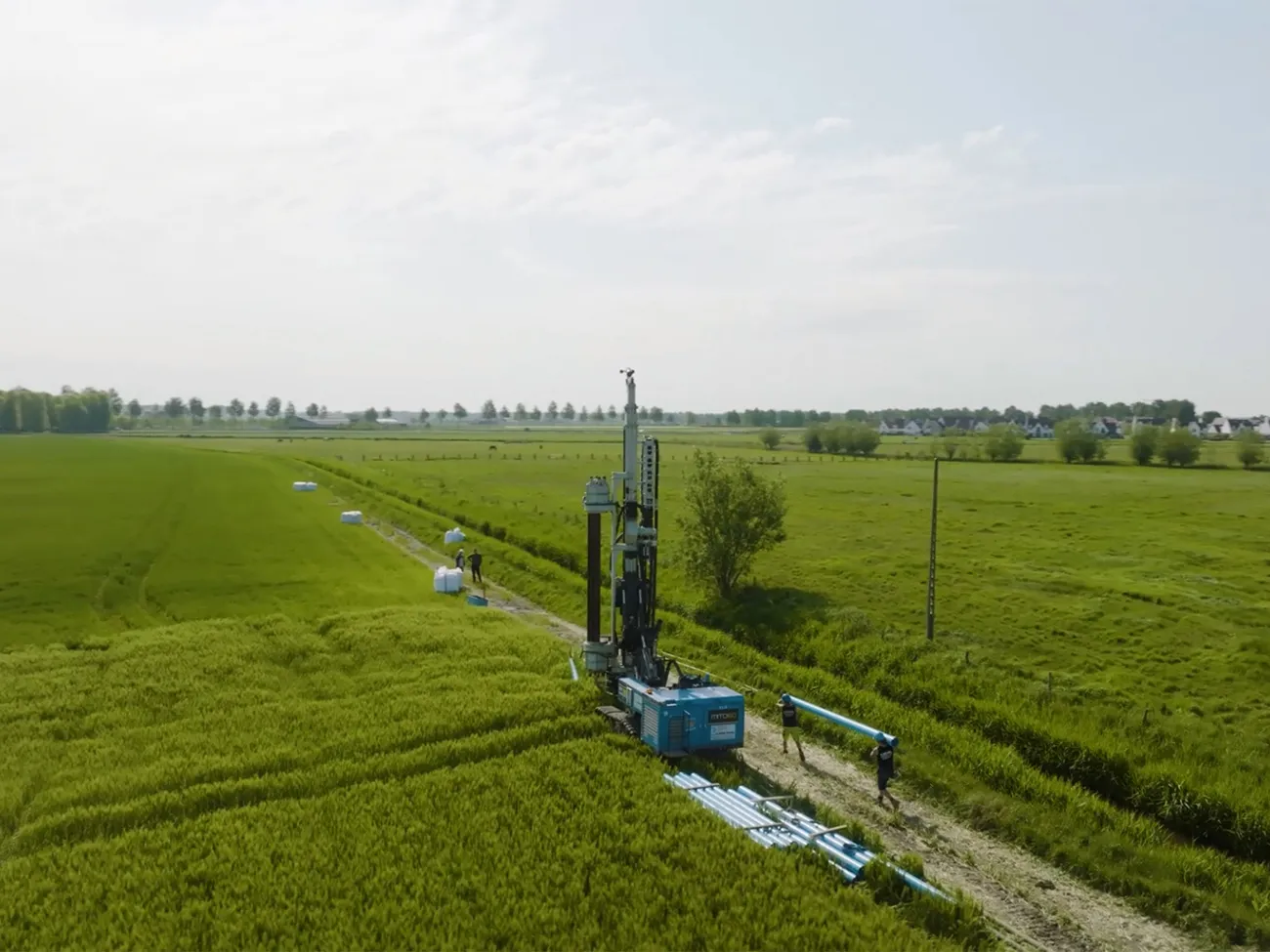
Two dewatering techniques
Willemen Infra and G. Smeyers quickly reached an agreement to deliver the project. The ground on site consists of highly permeable sand, so substantial volumes of water must be pumped to keep the sewer trenches and excavations dry to the required depth. G. Smeyers developed a dewatering proposal using two techniques: horizontal drains to dewater sewer trenches to depths of up to 4 m, and deep wells to dewater excavations and sewer trenches to depths of up to 6 m below ground level.
Permit insufficient
G. Smeyers quickly established, however, that the permitted pumping rates under the dewatering permit, a maximum daily volume of 2,292 m³/day and a maximum total volume of 324,533 m³/year, would not be sufficient to complete the works to the required schedule. To meet the schedule, at least three times as much water would have to be pumped, which would be completely unacceptable under the terms of the permit.
When dewatering the deep excavations, the aim was to prevent salt water from being pumped by limiting the depth of the deep wells to 12 m. However, the permit also required the pumped water to be discharged into the Isabellavaart, while prohibiting the discharge of brackish or salt water. The specifications also provided for possible reinjection if the salt content of the pumped water exceeded the permitted limit
“Based on our previous experience dewatering the earlier project on the Natiënlaan, we knew that water pumped from deep wells would soon be far too salty to discharge into the Isabellavaart,” says G. Smeyers. On the other hand, it is technically impossible to pump groundwater without aeration from wells 12 m deep while keeping the excavation itself, which is 6 m deep, dry.
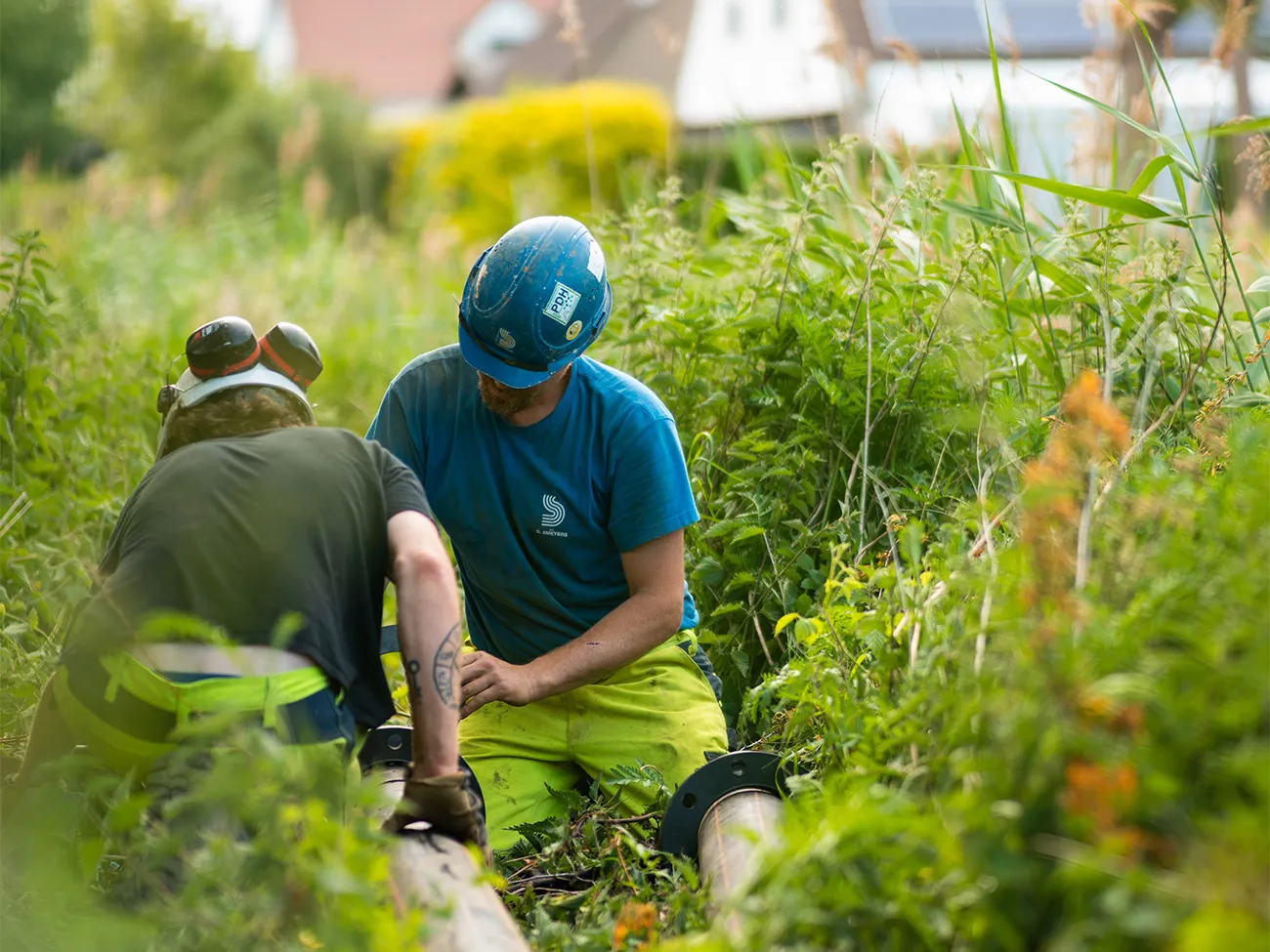
Dewatering plan devised in-house
G. Smeyers then devised its own dewatering plan for the works at the junction of the Isabellavaart and the Natiënlaan. This involved drilling deeper wells, from which groundwater could be pumped without aeration, and reinjecting the pumped water into recharge wells without any significant problems. A total of 15 deep wells, each 17 m deep, are planned. At no stage will more than 2,500 m³/day be pumped, and all the pumped water will be reinjected into the ground through 34 recharge wells.
The recharge wells were installed up to 400 m from the work zone, along the banks of the Isabellavaart on both sides of the Natiënlaan. The entire Natiënlaan and Isabellavaart junction is being dewatered using deep wells, with all the pumped water reinjected into the ground. No water is discharged. A separate dewatering permit was applied for to carry out this work, a Class 3 permit.
The planned recharge wells can also be used later when dewatering the sewer trenches. This work will not only use horizontal drains, as originally planned, but will necessarily also require deep wells in some sections. The recharge wells will help keep the pumping rate within the limits of the permit granted.
Expertise
Thanks to G. Smeyers’ expertise, a sound alternative was quickly developed to carry out the dewatering needed for the project within the limits of the permit granted, helping the contractor and client avoid significant delays or stoppages.
The first phase of dewatering, including reinjection, is now under way and everything is proceeding as planned. “The Knokke-Heist project to connect the Natiënlaan to the N19 will only strengthen the existing partnership between G. Smeyers and Willemen Infra,” the company says confidently.
A business enquiry for Smeyers nv? Get in touch
Companies in this story

Keep following this
Get an email when a new story is published. No account needed.
- SubjectRoad construction
- CompanySmeyers nv