A pioneer in permeable and water-infiltrating paving continues to innovate
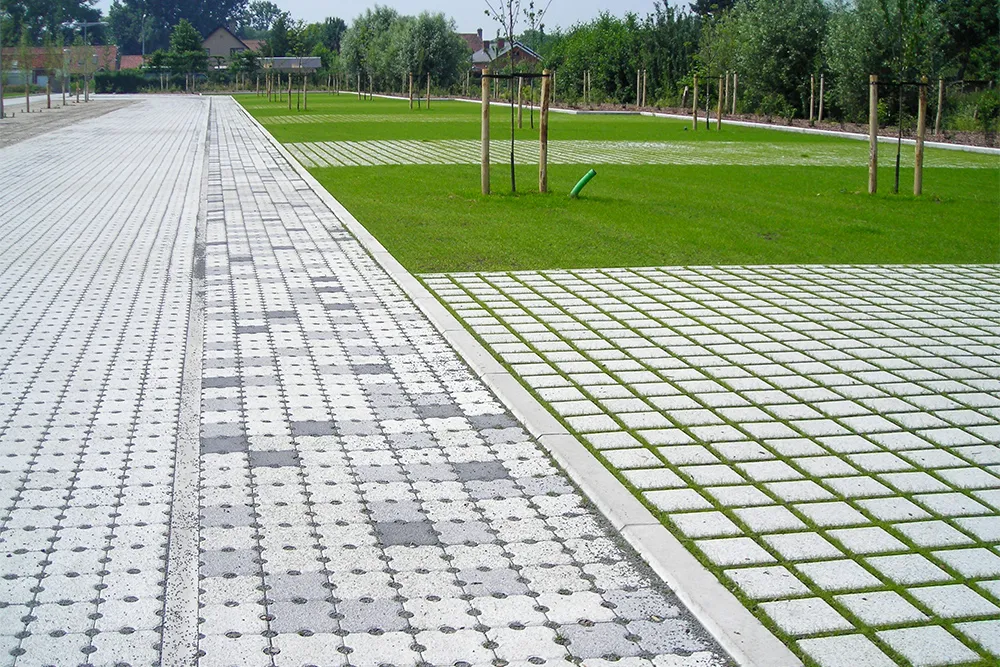
Permeable and water-infiltrating paving products have become increasingly popular in recent years, both on private sites and in public spaces. The importance of rainwater infiltration has now become widely recognised. At Bleijko, the renowned concrete producer with Dutch roots and a production site in Roeselare (B), they saw the light more than thirty years ago. “We were among the first to bring permeable and water-infiltrating products to market in Belgium and the Netherlands,” says Frank Mortier of Bleijko.
From small car parks and sports facilities to shopping-centre car parks, business parks and large public spaces … Over the past few decades, Bleijko has seen a steady increase in the importance of water-infiltrating and permeable products. “At first, these were mainly porous blocks, through which rainwater infiltrates. But their range of applications is limited, given their low load-bearing capacity and the adverse effects of de-icing salts. So we soon turned our attention to permeable products that allow rainwater to infiltrate through the joints. In the 1990s, Febestral (the subdivision of FEBE bringing together manufacturers of concrete paving blocks) was already advocating the use and importance of permeable and water-infiltrating paving in the Flemish Parliament. It took years for clients, administrations, authorities, local governments and designers to fully embrace the approach. Fortunately, that scepticism has now disappeared.”
Water-infiltrating and permeable
Bleijko’s water-infiltrating and permeable paving, combined with a suitable sub-base system, ensures that rainwater is managed efficiently. These paving types work in three ways: first, rainwater is collected in the permeable paving and sub-base, where it is temporarily stored. The water then gradually infiltrates into the ground. Finally, any excess water that cannot infiltrate directly is channelled into drainage systems or facilities to prevent waterlogging and flooding. Frank Mortier says: “A large proportion of our water-infiltrating and permeable products go to the public sector, but some of the largest areas we supply are on private sites, such as supermarket car parks and company parking areas.”
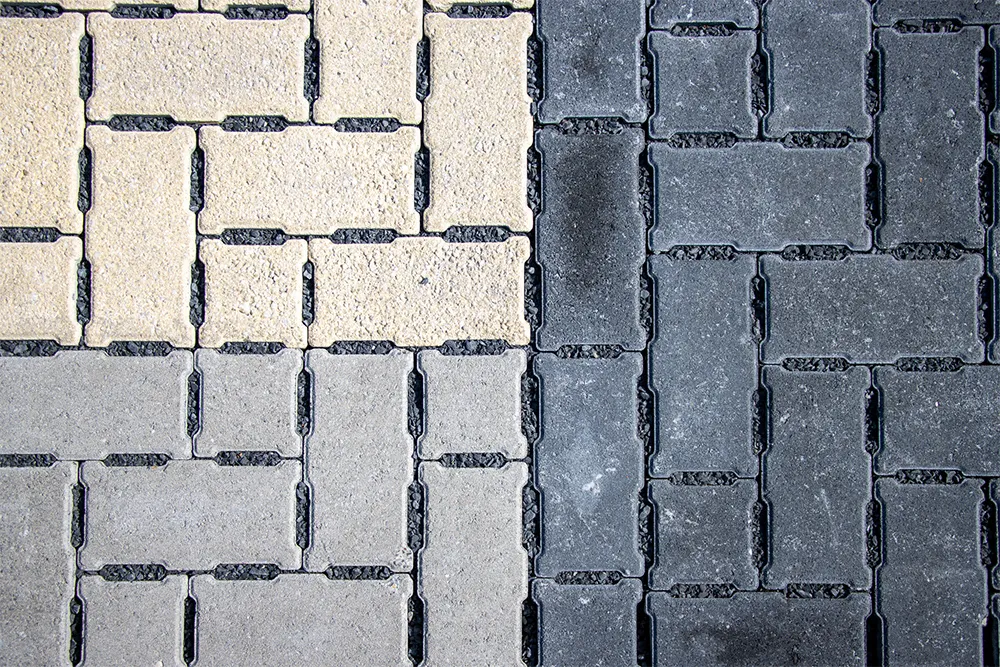
Bleijko now offers an extensive range. The Perfora® and Percola® blocks are permeable paving products available in various colours and finishes. The Percola® block features round recesses and is available in a standard version, a colourfast version and in A’gora, with a top layer finished by shot blasting. The Perfora® block is a permeable paving product with spacers, available in various designs, colours and sizes. For water-infiltrating paving, we offer the Piove® block, made from porous concrete and available in the standard colours grey, black, red and heather purple.
Grass-concrete pavers
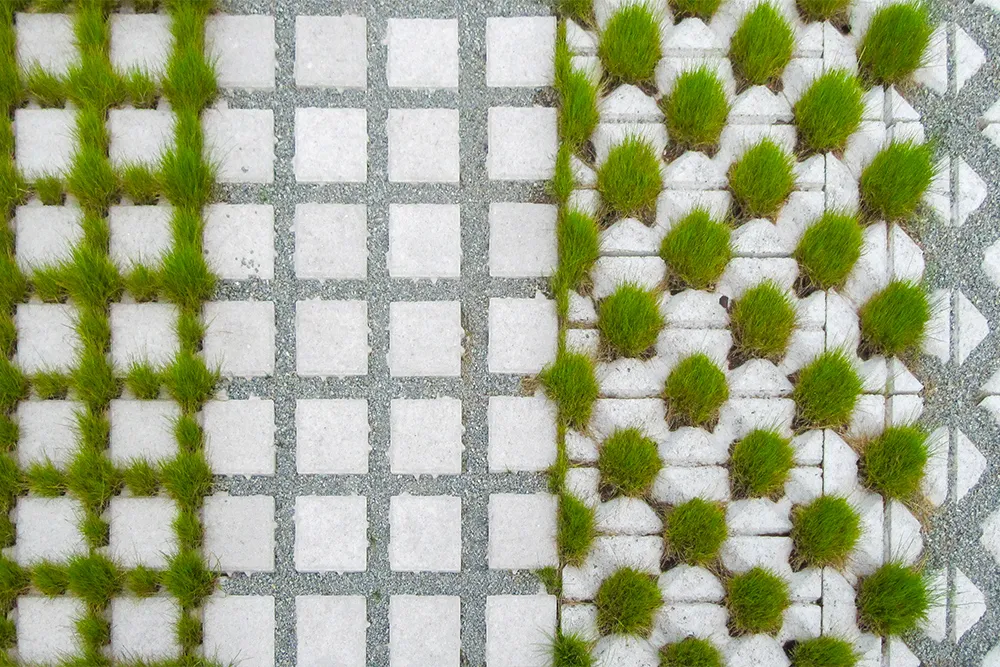
“And then, of course, there are grass-concrete pavers, which continue to hold their own in our range,” explains Frank Mortier. Where paving and nature can complement each other, grass-concrete pavers offer an excellent solution. This product protects the ground against erosion without compromising its natural appearance. Grass can grow through the openings in the paver. Grass-concrete pavers are therefore particularly suitable for escape routes and verge strips, firebreaks, and slope and bank protection. Frank Mortier says: “Grass-concrete pavers are really an eco-product avant la lettre and have been around for more than 50 years. Choosing between permeable or water-infiltrating paving and grass-concrete pavers is purely an aesthetic decision. In that respect, paving with concrete blocks is obviously more elegant, although Bleijko’s linear grass pavers create a very attractive streetscape.”
Pioneer
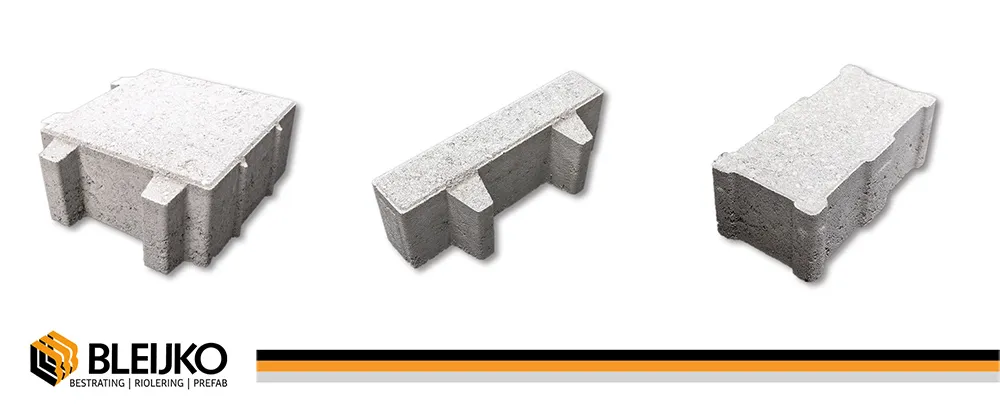
Bleijko is regarded as a pioneer in water-infiltrating and permeable paving, and intends to continue playing that role in the future. “Today, our long experience sets us apart, not just in terms of products but also in how they can be used. Where can they be used? What condition is the sub-base in? Is the groundwater level suitable? We have all that expertise in-house. And the popularity of this type of paving will only continue to grow. Today, we sell as many eco-products as conventional paving blocks, something we would never have predicted a few years ago. That is why we are continually developing new moulds. Bleijko has traditionally been best known for decorative paving. These moulds also allow us to offer an eco-friendly variant. The possibilities are expanding all the time.
What still holds clients and private owners back is a lack of knowledge about the cost, even though it is no more expensive. Certainly not when you consider the cost over the entire life cycle. For example, choosing permeable paving in some locations can eliminate the need for sewers, while using grass-concrete pavers on verges is much cheaper in the long term than topping up the gravel several times a year,” concludes Frank Mortier.
Een zakelijke vraag aan Bleijko Betonindustrie B.V.? Get in touch
Companies in this story
Keep following this
Get an email when a new story is published. No account needed.
- ThemeSpace for water and green infrastructure
- SubjectRoad construction
- CompanyBleijko Betonindustrie B.V.