Modal shift: are you doing your bit?
Flanders has ambitious mobility targets. In the coming years, we will work towards smoother, safer and more sustainable journeys: a modal shift that encourages alternatives to cars and lorries. Achieving this shift requires action on several fronts. The construction sector also has a part to play.
The world of mobility has its own jargon. For example, we use the abbreviation AMS for Ambitious Modal Shift. The current coalition agreement of the Flemish Government sets a specific target: to increase the share of sustainable modes across Flanders to at least 40%. This includes journeys on foot, by (e-)scooter, (e-)bike or speed pedelec, privately owned or shared, and by public transport or taxi. In the transport regions of Vlaamse Rand, Antwerpen and Gent, the target is even higher, with sustainable modes accounting for at least 50% of journeys.
The aim of increasing the number of journeys made using sustainable modes goes beyond the current coalition agreement. Last year, the Mobility Vision 2040 was formally approved: a long-term vision setting out policy priorities and ambitions for mobility in Flanders. It, too, regards the shift to sustainable modes of transport as an absolute necessity.
A combination of approaches
Aiming for a modal shift does not mean that, in future, we will rely exclusively on rail and inland waterways for freight. Nor does it mean that, for passenger transport, we will focus only on public transport and cycling. ‘Using smartly organised traffic and transport to connect people and businesses sustainably’: this is how we describe our destination in the Mobility Vision 2040. To achieve the modal shift, it is essential to continue developing all modes. Combining different modes of transport intelligently is what makes it possible to switch to optimal and efficient journeys. That is why Flanders is investing heavily in transhipment hubs for freight transport and Hoppin points for passengers. Hoppin points are transport hubs where several transport options come together. For example, a station area might have buses, shared bikes and cars, as well as parking spaces. They play an important role in the shift to basic accessibility, the Flemish vision for mobility that puts combined mobility at its heart. If all these hubs can fulfil their role, they will give sustainable modes a boost.
Infrastructure and more
A high-quality infrastructure network is an important foundation for smooth, safe and sustainable mobility. The construction sector undoubtedly has a part to play. Take, for example, the expansion of the quay network along the waterways. The works associated with the Oosterweel Connection, which aim to keep traffic flowing around Antwerpen. The many investments in cycling infrastructure throughout Flanders. The raising of the bridges over the Albertkanaal, improved access to the ports for inland shipping, and works on the Seine-Scheldt connection, which will make it possible to move more freight by water. To name just a few.
But it takes more than infrastructure. Achieving a modal shift calls for a combined approach: the right high-quality infrastructure, sustainable use of materials and minimising disruption during works, as well as encouraging users to adopt the right behaviour and raising awareness.
Go the extra mile
A modal shift also requires a shift in mindset. If we want to travel differently in future, we will have to start thinking differently. The construction sector, too, will need to break with established ways of thinking to help bring about the modal shift. Are there deliveries you currently make by lorry that could be organised differently in future? How can you reduce the number of journeys? Could some journeys in the city be made by electric bike rather than light commercial vehicle? Or by water? These questions will be asked increasingly often in future. The government will encourage the desired behaviour, for example through subsidies for sustainable journeys and modes of transport. But it will also make undesirable behaviour more difficult, including through tolls, fines and fuel requirements. Together, we can work towards fewer traffic jams, greater road safety and a better environment.
The examples already out there of sustainable delivery of construction materials and environmentally friendly transport for workers are good, but we can do better. We can and must do more. I therefore invite you, as members of the construction sector, to take a leading role and keep finding creative and innovative ways to make transport more sustainable!
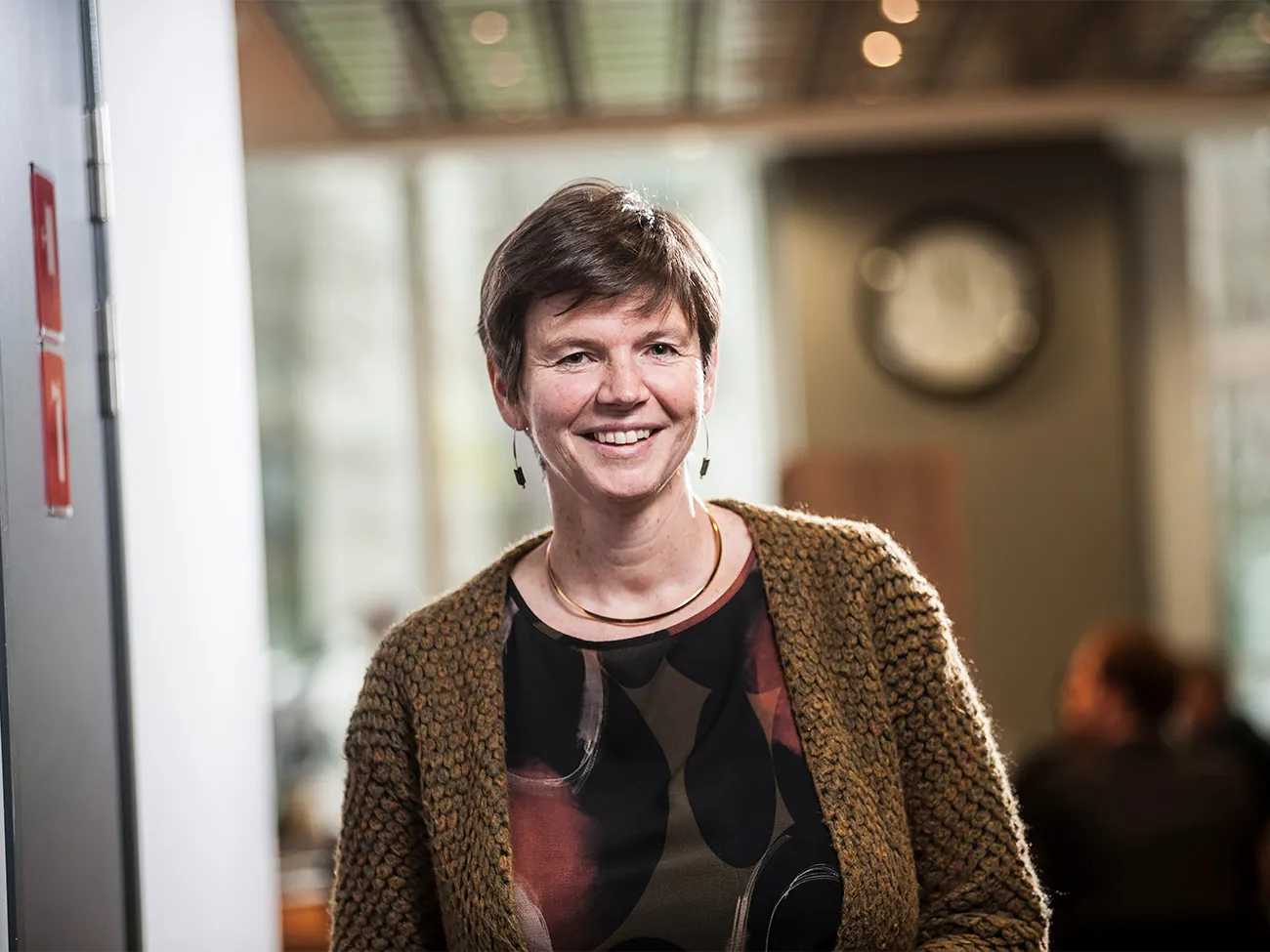
Ilse Hoet, Head of Policy
Department of Mobility and Public Works, Flemish Government
Question about this story? Ask your question
Keep following this
Get an email when a new story is published. No account needed.
- SubjectPeople & training