Which drill do I need for which job?
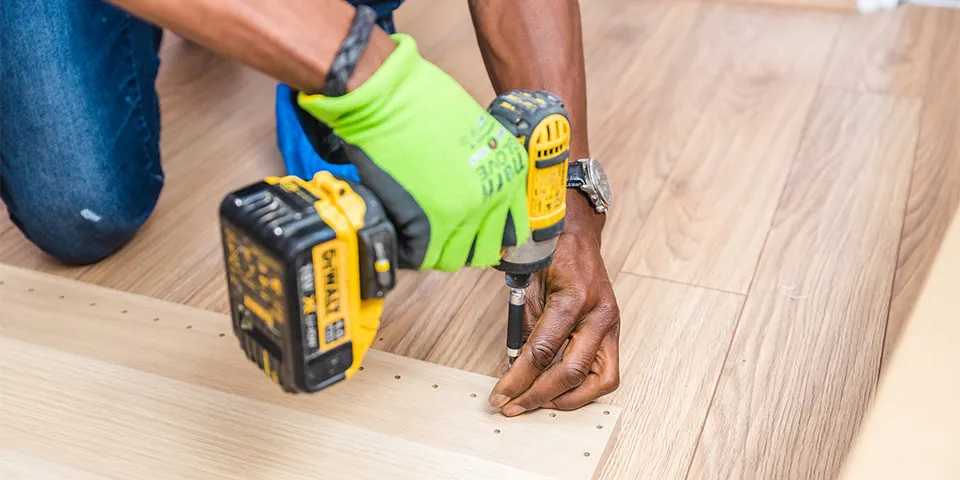
There are many different types of drill. But which drill is suitable for what? It is useful to know before you start a job. In this article, we take a closer look at the differences between a rotary hammer and a hammer drill.
The differences between a rotary hammer and a hammer drill
There are three factors that help you decide which drill, a rotary hammer or a hammer drill, is best suited to the job. These are impact force, speed and the safety clutch. Impact force determines how powerful the drill is, how large the holes you can make with it are, and how quickly you can drill through the material. Speed is how fast the drill rotates, while the safety clutch stops it rotating when it encounters too much resistance. You can also recognise rotary hammers by their screw chuck. This is a chuck that allows the drill bit to move forwards and backwards. A hammer drill has a chuck in which you can secure a drill bit by turning the chuck.
When should you use each type of hammer drill?
When drilling into stone, you do not need particularly high impact force or speed. A hammer drill is therefore sufficient for drilling into stone. A rotary hammer is too powerful for this and could damage the stone. A hammer drill is also the best choice for drilling into wood, because its speed can be adjusted both electronically and mechanically. The only time it is better to use a rotary hammer is when working with a hole saw. For safety, it is better to have a fast-acting safety clutch in that case. When drilling into metal, it is also useful to be able to adjust the speed both electronically and mechanically, making the hammer drill the most suitable option. You can set the speed to match the cutting speed and the drill bit diameter. If you get a curl of swarf while machining, you know you have the right speed. Because a rotary hammer has a fixed speed, it is less suitable for working with metal. Are you drilling into concrete? Then you mainly need impact force. The safety clutch is also important because of the reinforcing steel. A hammer drill has far too little impact force, so you should use a rotary hammer for drilling into concrete.
Question about this story? Ask your question
Keep following this
Get an email when a new story is published. No account needed.
- SubjectMachines & equipment