New clay paver enables permeable paving
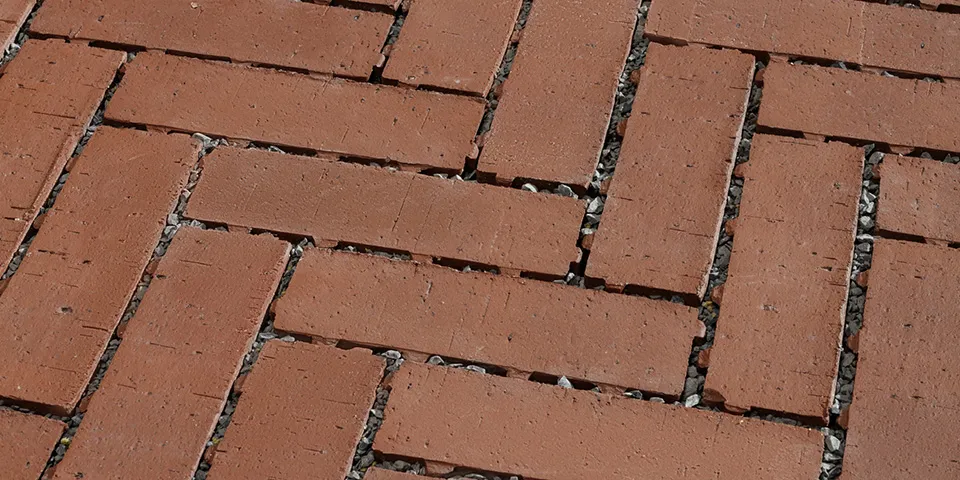
Paving and water permeability rarely go hand in hand. In the high-quality paving materials market, there has long been demand for products that allow water to infiltrate. With Passaqua, Wienerberger is meeting that demand. The clay paver also offers aesthetic as well as environmental benefits.
Thanks to its spacers, Passaqua creates joints 6 millimetres wide between the pavers. Water can easily infiltrate the ground through these joints. The paver itself is not permeable, but it does allow water to pass through the joints. Surely all paving with joints is permeable if the joints are cemented? To a certain extent, that is true, but to qualify as permeable paving, a paving project must have a joint area of 10%. As traditional pavers are usually laid with joints 1 to 3 millimetres wide, this percentage is almost never achieved. Wienerberger’s Passaqua is a clay paver measuring 200 x 63 x 80 millimetres, with spacers that create joints 6 millimetres wide, and it meets this minimum requirement.
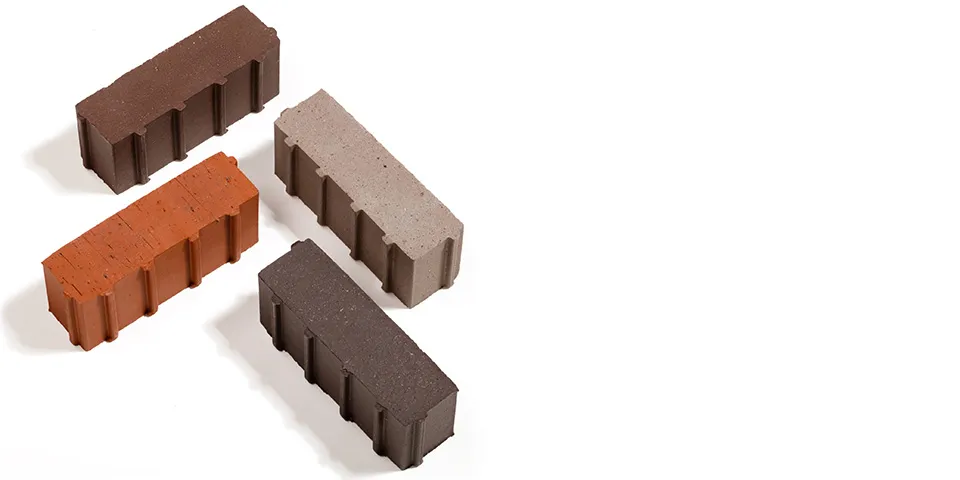
Passaqua is available in four colours: grey, red, black and brown.
No need for a separate infiltration facility
Today, 14.4% of the surface area in Flanders is paved. Water can no longer penetrate the ground through these paved surfaces, so it flows directly into the sewer system, which is not designed to cope with the increasing volume of water. To prevent water shortages and flooding, regional and planning regulations require rainwater to be collected and used or allowed to infiltrate into the ground. For example, Flemish regulations require an infiltration facility to be installed on plots larger than 250 m². In this context, Passaqua is an interesting option, as permeable paving does not have to be included when calculating the required infiltration facility. A patio or driveway paved with ‘water-permeable’ Passaqua is therefore a simple way to comply with the regulations.
Four colours
As well as helping to maintain groundwater reserves and reduce the risk of flooding, Passaqua offers aesthetic benefits. The paver is available in four colours: Doris (brown), Lotis (grey), Eros (black) and Magma (red). Like standard clay pavers, it has an authentic appearance that improves with age. The permeable joints must be filled with unbound crushed stone, and must not be filled with sand or cement. This also greatly reduces the risk of algae, moss and weeds growing. The water-permeable joint material drains quickly, preventing weeds from taking root. It is also very easy to maintain.
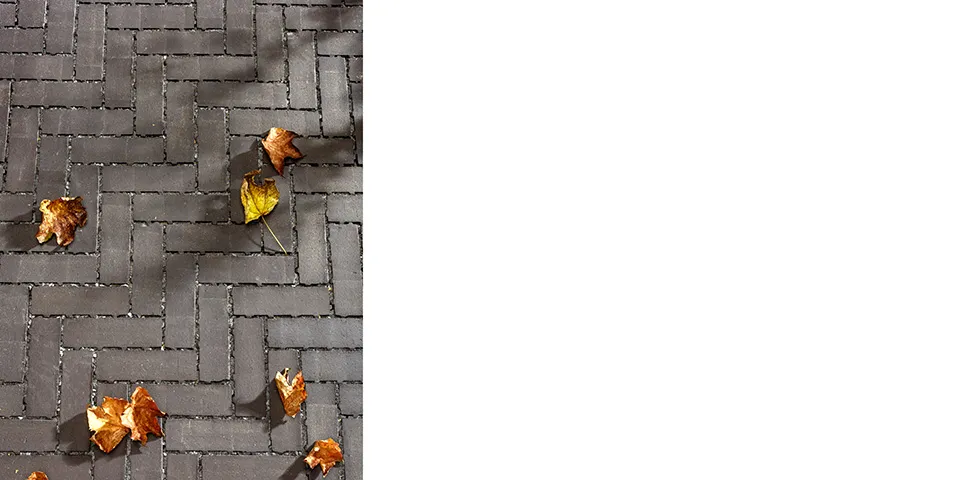
To qualify as permeable paving, a paving project must have a joint area of 10%. Passaqua guarantees this percentage.
Tested in De Duurzame Wijk
Thanks to its strength and inherent durability, Wienerberger’s new clay paver is suitable for patios and driveways at private homes, as well as paved fire-service access routes and public spaces such as car parks, squares, footpaths and cycle paths.
In 2015, Passaqua passed its first test with flying colours. In De Duurzame Wijk, a Wienerberger pilot project near the centre of Waregem, the patios and driveways were laid with the forerunner of today’s Passaqua. The development was built using traditional construction materials and proven building methods, and meets an impressive range of sustainability criteria. The project’s monitoring results were impressive, earning it a BREEAM certificate.
Question about this story? Ask your question
Keep following this
Get an email when a new story is published. No account needed.
- ThemeSpace for water and green infrastructure
- SubjectMachines & equipment