Cleaning from the surface deep into the pores
How different wet-cleaning methods can affect the appearance of streets
There are several options for wet-cleaning streets and squares: rinsing at low, medium or high pressure, scrubbing with brush technology or cleaning with hot water. Municipal services looking for the optimum equipment for their fleet should first consider how the machines will be used most: heavy-duty cleaning on construction sites, daily cleaning of streets and pavements, or removing greasy dirt in pedestrian zones. Which method is suited to which application, and when is it better to outsource the work? Cleaning specialist Kärcher offers a brief guide to the applications, advantages and disadvantages of the various methods and machines.
Machines fitted with spray bars are often used for cold-water spraying. Hand-operated equipment, such as pressure washers, can also be used. The nozzles and operating pressure must be matched to the requirements. Low pressure, up to 12 bar, is generally chosen for heavy-duty cleaning. At this pressure, water can bind large quantities of dust on construction sites or rinse muddy streets clean after a flood. The available solutions are relatively inexpensive to purchase, but require substantial volumes of water and large tanks.
One flexible option is medium-pressure rinsing. It is suitable for routine maintenance cleaning of streets and pavements, as well as quick cleaning jobs on construction sites. A pressure of up to 40 bar combined with a maximum water flow of 3,000 litres per hour delivers very good results. The only drawback is that it cannot clean deep into the pores, as the water pressure is insufficient. For particularly demanding jobs, such as thoroughly cleaning a playground, municipal services often opt for high-pressure rinsing. At 250 bar or more, water penetrates deep into the pores of surfaces and rinses them completely clean. Water consumption is lower than with low- and medium-pressure rinsing, but the investment costs are higher.
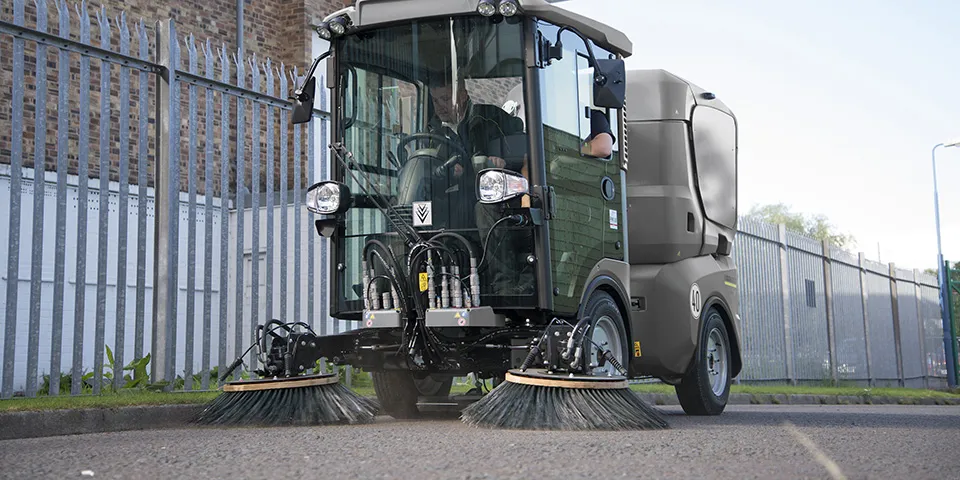
The advantages of disc brushes are low wear and high productivity over large areas. They operate at low rotational speeds and with low brush pressure.
Effective and flexible: scrubbing with disc-brush technology
Wet cleaning with brush technology is increasingly being used outdoors as cleaning requirements become more demanding. High-quality paving in pedestrian zones, for example, often needs to be protected against grey discolouration and cleaned as sustainably as possible.
While roller brushes are often preferred for indoor cleaning, disc brushes are commonly used outdoors. Their advantages are low wear and high productivity over large areas. They operate at low rotational speeds and with low brush pressure. Machines fitted with scrub decks also generally have pleasantly low water consumption.
A well-equipped fleet needs a supplier that can provide versatile machines. The machines must be suitable for both sweeping and wet cleaning, and it must be possible to switch quickly between the different implements. This means that, depending on the cleaning requirements, scrub decks and sweeping decks can be scheduled in turn to achieve the desired results. If a cleaning agent needs to be applied in special cases, Kaercher recommends consulting the manufacturer’s application engineer or technical adviser for information on the right combination of brush and cleaning agent.
For very demanding jobs: cleaning with hot water
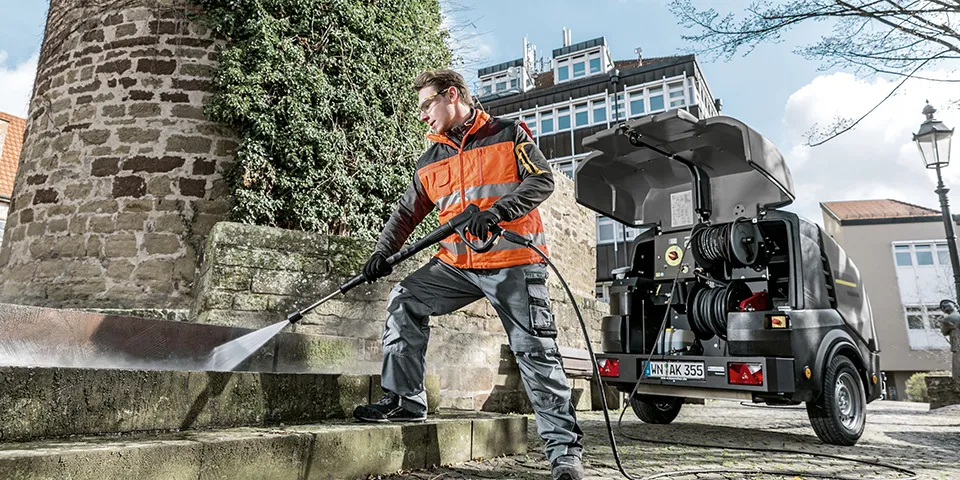
Manual hot-water cleaning using a high-pressure trailer and a hand-held pressure washer is highly suitable for tasks requiring particular precision, such as removing organic discolouration and oily or greasy dirt. As these systems do not require a water or electricity connection, they can also be used to clean otherwise inaccessible locations. As befits this type of application, the area coverage of manual hot-water cleaning is relatively low.
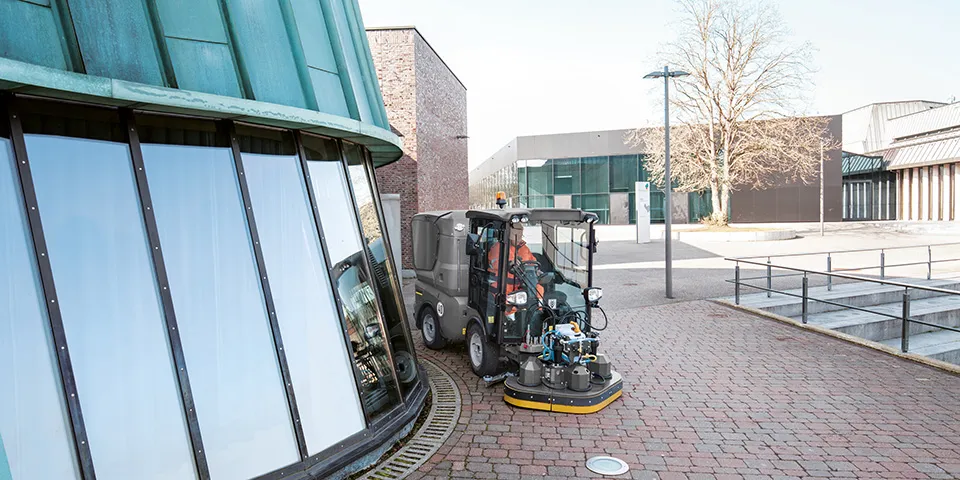
Municipal services looking for the optimum equipment for their fleet should first consider how the machines will be used most: heavy-duty cleaning on construction sites, daily cleaning of streets and pavements, or removing greasy dirt in pedestrian zones.
Safety first: what operators need to consider
Using the various cleaning technologies correctly is essential to prevent workplace accidents. It is therefore vital to understand the risks. A few examples:
- Rinsing at low pressure, up to 12 bar, is safe. At medium pressure, up to 40 bar, and high pressure, up to 250 bar and above, contact with the body must be avoided, as the high pressure can cause physical injury.
- Take care around the brushes when scrubbing. Wear suitable protective clothing: depending on their stiffness, the brushes can cause deep cuts.
- Different precautions apply when using cleaning agents, depending on their concentration and pH. In all cases, always follow this rule: pour the water into the tank first, then add the cleaning agent. This prevents splashes of undiluted concentrate from burning the skin.
Question about this story? Ask your question
Keep following this
Get an email when a new story is published. No account needed.
- SubjectMachines & equipment